
Your Recovery Starts With One Step
Confidential support available 24/7. Most insurance plans accepted — check yours in under a minute.
Confidential support available 24/7. Most insurance plans accepted — check yours in under a minute.
Cocaine, methamphetamine, and prescription medications like Adderall or Ritalin are all classified as stimulants. If you are looking for stimulants addiction treatment in Easton, MA, you may be concerned about your own use or noticing changes in someone close to you. At Rebuilding Recovery Center, outpatient care is measured to fit each person’s situation. This could mean a clinical assessment for a family member’s Adderall use, or a structured, individualized plan for cocaine or methamphetamine. Recovery is a step-by-step process. Structure, clinical guidance, and steady support help a person rebuild from where they are.
Stimulants are drugs that increase activity in the central nervous system. This group includes illicit substances like cocaine and methamphetamine, as well as prescription medications such as Adderall and Ritalin. Stimulants raise dopamine levels in the brain, which can increase alertness and energy, suppress appetite, and raise heart rate and blood pressure.
Cocaine and crack cocaine are illicit stimulants that raise dopamine activity in the brain, producing an intense high. Methamphetamine, including crystal meth, affects the central nervous system similarly. The two drugs differ in chemical structure, duration of effects, and pattern of misuse, though both carry a high risk of addiction. Cocaine and methamphetamine can be smoked, snorted, or injected, and repeated use can lead quickly to a stimulant use disorder.
Adderall (amphetamine) and Ritalin or Concerta (methylphenidate) are FDA-approved medications prescribed for conditions like ADHD and narcolepsy. Misuse means taking them without a prescription, or taking a prescribed medication in a higher dose or more often than directed. Because these drugs are legally prescribed to millions of people, families often don’t recognize when ADHD medication misuse has become a problem. A loved one’s Adderall or Vyvanse use can carry the same addiction risk as an illicit stimulant.


Your treatment team gets to know you holistically, building trust and understanding so your stimulant addiction treatment is goal-oriented.
Learn to notice relapse patterns and establish new habits that last. Our focus is on what works for you to maintain sobriety long-term.
Experience stimulant addiction treatment and mental health treatment together. Treating both conditions at the root promotes lasting healing.
Your treatment changes as you get better, so we help adjust your plan to match evolving needs. This way, care meets you where you are.
Get effective help when you need it most. Our team offers timely responses when you have questions or need support between sessions.

Stimulant use disorder often develops over time, making it easy to overlook until a pattern is set. Noticing such signs early, in yourself or someone close to you, is often the first step toward seeking stimulant addiction treatment in Easton, MA.
No single sign confirms stimulant use disorder by itself, but seeing several together is important to take seriously. A clinical assessment helps clarify what is happening and what support can help move things forward.

Stimulant withdrawal often starts with a hard crash. Energy drops sharply. Sleep can swing to the other extreme, and some people sleep far more than usual in the first few days. Mood tends to flatten into something heavier than ordinary tiredness. It’s common to feel irritable, foggy, or emotionally flat without an obvious cause.
Cravings can be intense in this early period, even when physical exhaustion makes actually using feel unappealing. This mix of physical depletion and psychological pull is part of what makes early withdrawal so disorienting. It doesn’t feel like one clear symptom easing over time. It feels like several things happening at once, on a timeline that’s hard to predict from the outside.
That’s exactly why clinical monitoring matters. Support during this period can catch complications early and ease the intensity of cravings. It can also create a stable bridge into the next stage of treatment.

Talking to a loved one about stimulant use is difficult, and there is no perfect way to begin. It helps to see this conversation as part of an ongoing process that can continue over time. You do not need to share every concern at once. Opening the door calmly, even once, matters more than covering everything in a single conversation.
Choose a calm, private moment, away from arguments or the aftermath of an incident. Focus on specific behaviors you’ve actually observed, such as missed work, changed sleep, or sudden mood swings, and describe what you’ve noticed and how it concerns you. Avoid ultimatums that sound like threats; calm honesty keeps a discussion open longer than pressure does. Ask questions, and listen closely to the answer, even when it’s hard to hear. Let the person know you’ve noticed, and that you’re staying present through it.

At Rebuilding Recovery Center, our stimulants addiction treatment in Easton, MA begins with a clinical assessment that looks at drug use history, physical health, mental health, and personal situations. This assessment shapes a treatment plan customized to each person, including whether a detox referral is needed, which co-occurring conditions need attention, and which level of outpatient care fits best.
For some people, the first step is medical detox. At Rebuilding Recovery Center, we coordinate this referral and placement with a trusted local partner. Once withdrawal is medically stable, care moves into our outpatient programming, guided by the same clinical assessment. This approach keeps a person connected to one team throughout the transition from detox to outpatient care.
Stimulant use often happens alongside anxiety or depression. We address both together for lasting results. Our clinical assessments include screening for co-occurring mental health conditions. This lets us build each plan to address both from the start. This integrated approach shapes how we structure dual diagnosis care. Behavioral therapy sits at the center of how we treat both stimulant use and the conditions connected to it.
We offer three outpatient levels of care for stimulant addiction rehab in Easton, MA: Day Treatment (PHP), Half-Day Treatment (IOP), and Virtual Treatment.
Day Treatment is our most structured option. It provides full-day clinical programming for people who need intensive support while still living at home.
Half-Day Treatment offers that same clinical foundation on a shorter daily schedule. This makes it easier to fit around work, school, or family responsibilities.
Virtual Treatment delivers that same individualized care remotely. This gives people more flexibility in how they attend sessions. We build relapse prevention planning into all three levels, adjusted to where each person is in their care.
Posted on Google
 Alicia Googins
Trustindex verifies that the original source of the review is Google.
Andrew Linberg and the team at Rebuilding Recovery are the best of the best. They care deeply about each and every client and the entire family system that is affected by the disease of addiction. Andrew is tireless in his support for those suffering from alcoholism and other addictions, and is truly gifted in helping others move towards lives of rigorous honestly and real recovery. Our family would not be where it is today without Rebuilding Recovery. Thank you.Posted on Google Earle DonahueExcellent program and facility. This place is saving lives.Posted on Google
 Bryan GillentineThe team at Rebuilding Recovery Center provides exceptional care and professionalism. They are compassionate, supportive, and committed to helping anyone navigate any challenges they may be facing. Their dedication and responsiveness truly set them apart.Posted on Google
 Peter SalamoneRebuilding Recovery in Easton truly helped me change my life. The intensive outpatient program gave me the structure, support, and tools I needed to stabilize my mental health and begin building a real foundation in recovery. The staff genuinely care and meet you where you are without judgment. Through therapy, group work, and consistent support, I was able to address both my mental health and substance use in a way that felt realistic and sustainable. This program helped me learn how to live drug- and alcohol-free while developing healthier coping skills and routines. I’m incredibly grateful for the guidance and support I received, and I would highly recommend Rebuilding Recovery to anyone serious about recovery and long-term change.Posted on Google
 Dean CIf you are struggling with substance abuse and/or mental health, please reach out. This place does it right and they can helpPosted on Google
 Cam JacobsGreat experience at Rebuilding Recovery Center. The staff is knowledgeable, welcoming, and genuinely cares about helping you feel and perform better. Highly recommend for anyone serious about recovery.Posted on Google
 Thomas BennettVirtual therapy was an awesome experience for me, using services from out of state was easy. Highly recommend Kyle for anyone looking for a therapistPosted on Google
 michael schryverWhat an absolutely great place with amazing people. Extremely comfortable atmosphere and excellent staff to help with your needsPosted on Google
 Aidan LevangieHaving worked in and been enrolled in multiple treatment centers throughout my life, I can't emphasize enough how different rebuilding recovery is. Every staff member genuinely cares and will do whatever they can to support you, and if something is beyond their capacity, they'll connect you with those who can help. If you're struggling, this is the first place I would recommend seeking help.
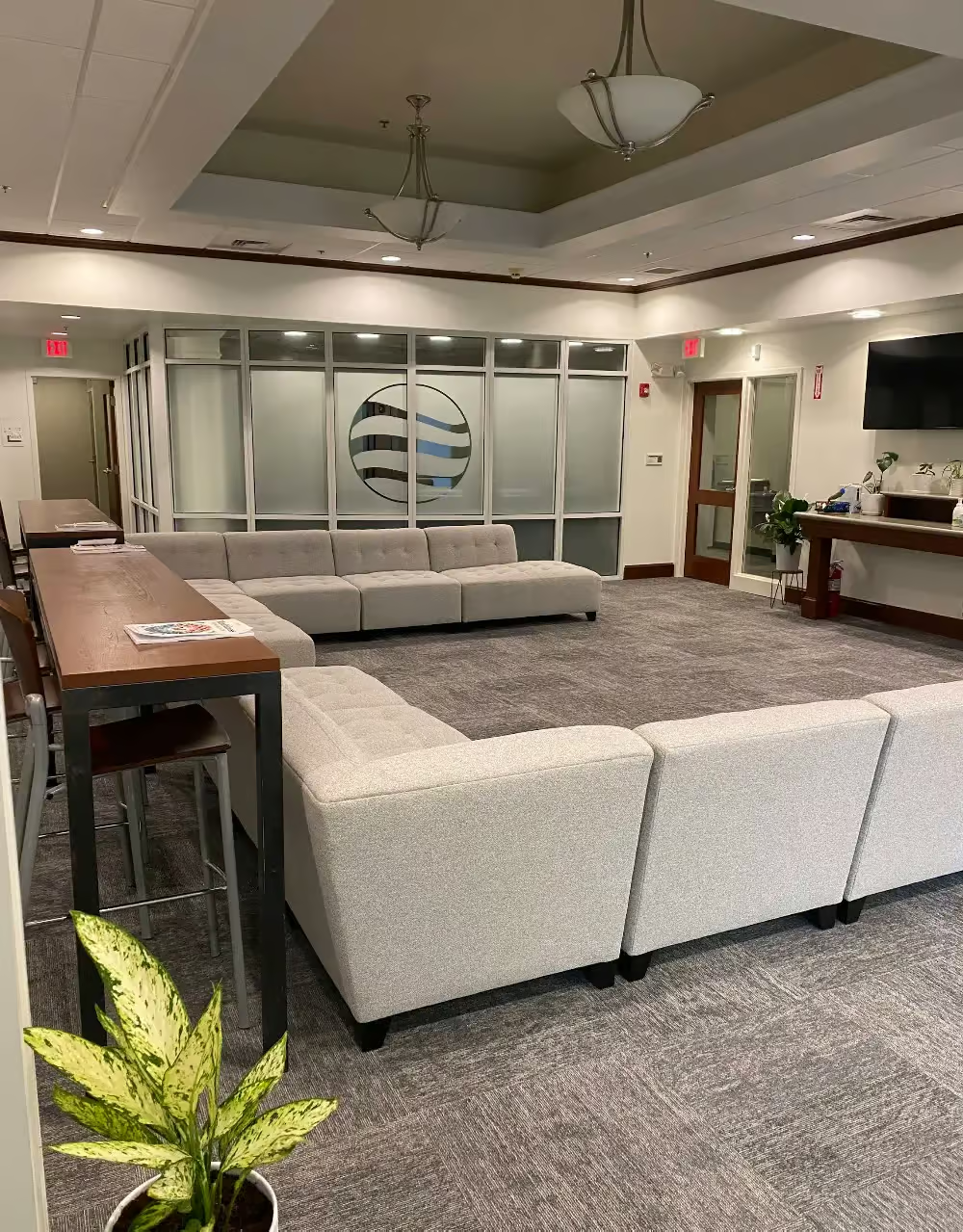
Staying close to home during treatment means you don’t have to put your life on pause to get help. You can keep your job, stay near family, and start applying what you learn in real situations right away. We serve Easton and the surrounding South Shore area, including South Easton, Brockton, Bridgewater, Mansfield, Norton, Foxborough, Sharon, Taunton, and the greater Bristol County and Boston region.
We build your plan around your specific history. That matters because recovery has to work inside the life you’re actually living, with the same job, relationships, and responsibilities you’ll return to. Treatment that ignores that context tends to fall apart once it ends. Ours goes beyond symptoms to account for what your life looks like outside of care, so what you build here lasts.
Most people who call us aren’t sure what they need yet. That’s exactly what the first conversation is for. We’ll ask about your situation, listen to what’s actually going on, and talk through which level of outpatient care may fit. Nothing is decided on that call. It’s simply a conversation, a chance to talk through where you’re at and what might help.
If insurance is a concern, we can verify your benefits before you decide anything. Most major plans are accepted on an out-of-network basis, and our admissions team will walk you through the numbers clearly, so there are no surprises later.
Call us today, and let’s figure out the next step together.
There’s no FDA-approved medication specifically for stimulant use disorder. Some people do benefit from medications that address related issues, like sleep or mood, but the core of treatment is behavioral therapy. It helps you understand what’s driving the use and build coping skills that last beyond treatment.
No. At Rebuilding Recovery Center, we connect clients with a trusted local partner for medical detox. Our admissions team coordinates that referral directly, so support continues without a gap once withdrawal is medically stable and outpatient care begins.
Yes. Substance use and conditions like anxiety and depression frequently co-occur, and we screen for both as part of intake. Addressing stimulant use and a mental health condition as one connected plan produces stronger results than treating them separately.
We offer Day Treatment, Half-Day Treatment, and Virtual Treatment for stimulant addiction rehab across the towns we already serve throughout Bristol County and the South Shore. A clinical assessment determines the level that best fits your current needs.
In most cases, yes. We accept most major insurance plans on an out-of-network basis, and our admissions team verifies your benefits before care begins. You’ll have clear numbers in hand before you decide anything.